
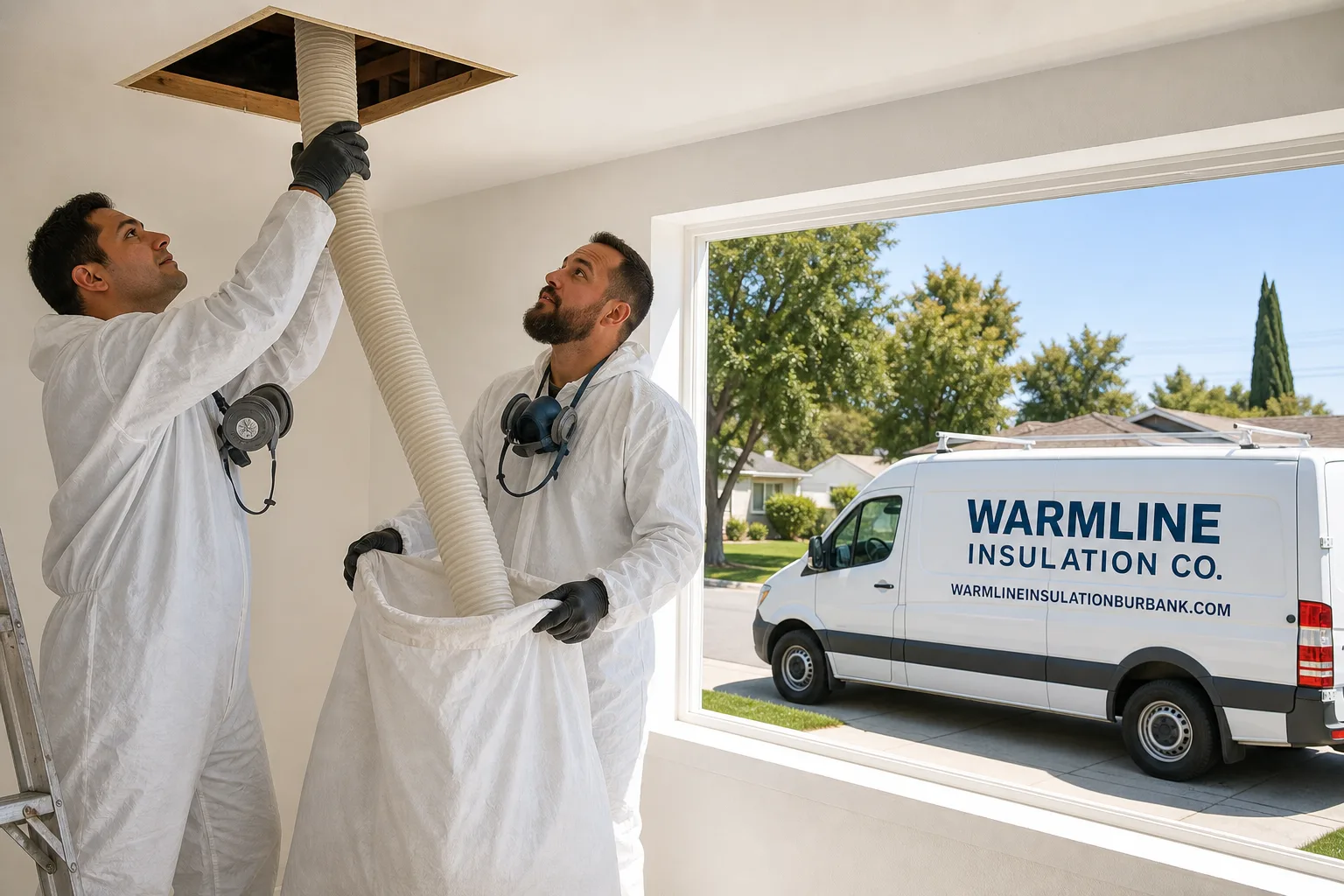
How Much Does a Home Energy Audit Cost in Burbank?
A home energy audit in Burbank, CA typically costs between $200 and $650 for a professional assessment, with most single-family homes in the 1,400-2,200 sq ft range landing around $300-$450. That price covers a full blower-door test, thermal imaging scan, combustion safety check, and a written report with prioritized recommendations – the kind of diagnostic that tells you exactly where your energy dollars are escaping before you spend a cent on insulation or air sealing.
If you want to skip straight to booking a free estimate with Warmline Insulation Co., call (747) 837-5834 – a live person picks up 24/7, no voicemail.
Home Energy Audit Cost Breakdown for Burbank (2026)
Prices below reflect what Burbank homeowners are actually paying in 2026. Burbank sits in Climate Zone 9 under California’s Title 24 building code, which means auditors calibrate their testing protocols specifically for our dry summers and mild-but-real winters – that’s a different baseline than what you’d see quoted in, say, a national cost guide written for Chicago or Boston.
| Audit Component | Typical Cost Range | What’s Included |
|---|---|---|
| Basic Visual Walkthrough Only | $75 – $150 | Inspector walks the home, notes obvious gaps; no instrumented testing |
| Standard Blower-Door Test + Report | $200 – $350 | Depressurizes the home to locate air leaks; written summary of findings |
| Blower-Door + Thermal Imaging | $300 – $475 | Infrared camera identifies insulation voids and moisture intrusion not visible to the eye |
| Comprehensive Building-Science Audit | $400 – $650 | Blower-door, thermal imaging, combustion safety check, duct leakage test, full written report with prioritized retrofit plan |
| HERS Rating (Title 24 Compliance) | $400 – $800 | Required for permitted work or utility rebate programs; performed by a certified HERS Rater |
| Follow-Up Verification Test | $100 – $200 | Re-tests after air sealing or insulation work to document improvement |
Why Most Burbank Homeowners Choose the Comprehensive Option
The blower-door-plus-thermal-imaging audit is where the real value is. A blower-door test tells you the house is leaky. The thermal camera tells you exactly where – whether that’s the top plates of your walls in a Magnolia Park craftsman, the recessed lights in a Rancho neighborhood tract home, or the band joists in a hillside property near the Verdugo Mountains. Without that precision, any subsequent insulation work is just guesswork.
At Warmline Insulation Co., we frame the Home Energy Audit as the diagnostic foundation that makes every other service smarter. Spending $350-$450 on a thorough audit before you touch a roll of Owens Corning batts or a drum of Icynene spray foam can easily redirect your retrofit budget to deliver twice the energy savings.
What’s Typically NOT Included in the Quoted Price
- Utility bill analysis (sometimes separate, sometimes bundled – ask upfront)
- HVAC system efficiency testing beyond basic combustion safety
- Structural or roofing inspection
- Any actual insulation, air sealing, or remediation work
- HERS rating certification (this is a distinct service from a standard energy audit)
What Affects Home Energy Audit Pricing in Burbank
No two homes – and no two audits – are identical. Here are the six factors that most reliably move the price up or down for Burbank properties specifically.
- Home size and story count. A 900 sq ft bungalow in Downtown Burbank takes roughly 90 minutes to audit thoroughly. A 2,800 sq ft two-story in Burbank Hills near Glenoaks Canyon can take three hours or more. Most auditors price per hour or per square foot, so size is the biggest single variable.
- Age and construction type. Pre-1980 Burbank homes – and there are a lot of them, particularly in the Rancho and Magnolia Park neighborhoods – often have balloon-frame construction, minimal original insulation, and older HVAC systems. These homes take longer to audit because there are more potential failure points, which typically adds $50-$100 to the base price.
- Accessibility of the attic and crawl space. Many hillside properties near the Verdugo Mountains have tight attic hatches or unconventional crawl space configurations. If an auditor has to work around difficult access, expect a modest upcharge.
- Testing scope requested. Adding a duct leakage test to a standard blower-door audit adds roughly $75-$150. A combustion safety check on gas appliances adds $50-$100. The more instrumented the audit, the higher the cost – but also the more actionable the report.
- HERS rating requirement. If you’re pulling a permit for a remodel or renovation in Burbank, the City of Burbank Building and Safety Division may require a HERS rating to demonstrate Title 24 compliance. That’s a separate certification from a standard energy audit and is performed by a state-certified HERS Rater. Budget $400-$800 and plan the timing accordingly – this isn’t something to schedule last-minute before a permit inspection.
- Utility rebate program eligibility. Southern California Edison’s Home Energy Efficiency Rebate program and SoCalGas efficiency incentives both have specific audit requirements for rebate eligibility. If you want the audit to qualify you for rebates, confirm with the auditor upfront that their methodology and credentials meet the utility’s current program standards. Some audits do; many don’t.
A Local Note on Burbank’s Climate
Burbank sits in a thermal corridor between the San Fernando Valley heat sink and the cooler air moving in from the coast. Summer attic temperatures in Burbank can exceed 150°F on hot days, which puts outsized pressure on HVAC systems and makes radiant barrier performance particularly relevant here. A good auditor who knows Burbank will flag attic thermal performance as a priority – not just air leakage. If your auditor doesn’t mention radiant barriers or attic ventilation in a Burbank home, that’s worth asking about.
How to Save on a Home Energy Audit in Burbank
1. Check Your Utility’s Rebate Programs First
Southern California Edison and SoCalGas both offer energy efficiency programs that can offset audit costs or reimburse you for qualifying improvements discovered through an audit. SoCalGas has historically offered free or heavily subsidized audits for income-qualifying customers through its Energy Savings Assistance Program. Even if you don’t qualify for income-based assistance, both utilities periodically run rebate programs tied to attic insulation upgrades, HVAC replacements, and air sealing – improvements that a solid audit will point you toward. Check sce.com and socalgas.com before you book anything.
2. Bundle the Audit with Your First Remediation Project
Some insulation and home-performance contractors – including Warmline Insulation Co. – credit part or all of the audit cost when you proceed with insulation or air sealing work based on the audit findings. Ask about this upfront. A $350 audit that leads to a $2,400 attic insulation project with GreenFiber blown-in is a very different financial picture than a standalone diagnostic.
3. Take Advantage of the $89 Seasonal Tune-Up
Warmline’s $89 Seasonal Tune-Up is a targeted pre-season inspection that can serve as a lower-cost entry point if you’re not ready for a full comprehensive audit. It’s not a substitute for a blower-door test, but it often surfaces the most obvious issues – insulation gaps, attic air bypasses, visible duct problems – and gives you a clear sense of whether a full audit is warranted. Seniors and veterans also receive a 5% discount on all services, applied automatically.
4. Get a Free Estimate Before You Commit to Any Audit
Audit pricing in Burbank varies more than it should across providers. Some companies quote a flat rate; others charge by the hour with no ceiling. Before you book, call (747) 837-5834 – Warmline’s team will give you an upfront, no-surprise quote based on your home’s specifics. There’s no cost to the estimate and no obligation.
5. Ask About Federal Tax Credits
Under the Inflation Reduction Act’s 25C energy efficiency tax credit program, certain home energy audits performed by qualified auditors qualify for a federal tax credit of up to $150. The credit applies to the audit itself, separate from credits available for insulation improvements. This doesn’t reduce the upfront cost, but it reduces what you actually pay out of pocket for the year. Your tax preparer can confirm eligibility based on your specific situation.
What Happens During a Home Energy Audit in Burbank
If you’ve never had one done, a professional home energy audit is more systematic than most homeowners expect. It’s not a contractor walking around with a notepad – or at least it shouldn’t be. Here’s what a thorough audit looks like in practice.
Pre-Visit Document Review
A good auditor will ask you for 12 months of utility bills before arriving. This baseline data tells them what your home is actually consuming versus what a home of its size and age in Burbank’s Climate Zone 9 should consume. If your bills are 40% above the regional average, that’s a signal that either the envelope has serious gaps or the HVAC system is struggling – both of which the audit will then try to locate and quantify.
Blower-Door Depressurization Test
The auditor temporarily seals your home’s exterior and installs a calibrated fan in a doorframe. By depressurizing the house, they force air through every gap and crack – and those leaks become detectable with smoke pencils or an infrared camera. The result is a CFM50 (cubic feet per minute at 50 pascals) reading that tells you exactly how leaky your home is relative to California’s Title 24 performance standards. In older Burbank homes from the 1950s and 1960s, it’s common to see readings two to three times the current code threshold.
Thermal Imaging Scan
With the blower-door still running, the auditor walks the home with an infrared camera. Cold spots on interior walls during the blower-door test reveal air infiltration; irregular temperature patterns in the attic floor reveal insulation voids. In Burbank hillside homes, we regularly see heat pathways around knee walls that homeowners had no idea existed.
Combustion Safety and Carbon Monoxide Check
If your home has a gas furnace, water heater, or range, the auditor will check for combustion spillage and carbon monoxide. This is a safety check as much as an efficiency check – a backdrafting furnace is a health hazard, not just an energy waste. Don’t skip this step.
Written Report and Prioritized Retrofit Plan
A thorough audit ends with a written report that ranks recommended improvements by cost-effectiveness – not by what’s easiest to sell you. The best reports tell you: if you do these three things first, you’ll capture 80% of the available energy savings. That’s the kind of actionable output that makes the audit worth every dollar.
You can learn more about what our full diagnostic process covers on the Home Energy Audit in Burbank service page.
Is a Home Energy Audit Worth the Cost in Burbank?
Short answer: yes, almost always – but the math depends on what the audit finds and what you do with it.
The U.S. Department of Energy estimates that air leaks alone account for 25-40% of a home’s heating and cooling costs. In Burbank, where summer cooling bills can run $180-$280 per month for a mid-size home, that’s $45-$110 per month in recoverable savings just from air sealing. A $350 audit that leads to $600 in attic air sealing and blown-in insulation work (installed using Johns Manville or GreenFiber product, for example) can pay back in under 18 months and reduce bills for decades.
The audit itself doesn’t save energy. The improvements it identifies do. But without the diagnostic, improvements are guesswork – and guesswork is how people spend $3,000 on new windows when the actual problem is an uninsulated attic hatch three feet away.
Warmline Insulation Co. has been doing this work in the greater Burbank area since 2011. We’ve walked through enough attics in Magnolia Park, Rancho, Burbank Hills, and Downtown Burbank to know that the problems hiding in older homes rarely match what a homeowner suspects. The audit is where certainty starts.
FAQs – Home Energy Audit Cost in Burbank
How much does a home energy audit cost in Burbank, CA?
A professional home energy audit in Burbank costs between $200 and $650 for most single-family homes, depending on the scope of testing. A basic blower-door test with a written report typically runs $200-$350; a comprehensive audit with thermal imaging, combustion safety testing, and a prioritized retrofit plan runs $400-$650. HERS ratings for Title 24 compliance are a separate service priced at $400-$800. Call (747) 837-5834 for a free, no-obligation quote specific to your home – pricing is upfront, no surprises.
Is a home energy audit free in Burbank?
Free audits are available to qualifying customers through Southern California Edison’s and SoCalGas’s income-based assistance programs (SoCalGas’s Energy Savings Assistance Program, for example). Most homeowners who don’t qualify for income-based programs will pay $200-$650 for a professional audit. Some contractors, including Warmline Insulation Co., offer free estimates and may apply part of the audit cost toward subsequent insulation or air sealing work – ask about this when you call (747) 837-5834.
How long does a home energy audit take in Burbank?
Most homes in the 1,200-2,400 sq ft range typical of Burbank neighborhoods take 2 to 4 hours for a comprehensive audit. Smaller bungalows in Magnolia Park or Downtown Burbank may take 90 minutes. Larger two-story homes in Burbank Hills or properties with complex crawl space configurations can run 4-5 hours. Add time if the auditor conducts a duct leakage test or extensive combustion safety testing.
Will a home energy audit lower my energy bills?
The audit itself won’t lower your bills – the improvements it identifies will. However, homeowners who act on audit recommendations typically see 15-30% reductions in annual energy costs, according to ENERGY STAR and DOE data. In Burbank’s climate, the highest-return improvements are usually attic air sealing, blown-in insulation, and (during summer) radiant barrier installation. The audit tells you which of those moves your needle most. To discuss what’s likely driving your bills, call (747) 837-5834 – estimates are free.
Do I need a HERS rating or a home energy audit for my Burbank remodel?
For most permitted renovation work in Burbank that affects the building envelope or HVAC system, California’s Title 24 building code requires a HERS rating performed by a certified HERS Rater – this is different from a standard home energy audit and typically costs $400-$800. A general home energy audit is not a substitute for a HERS rating if your building permit requires compliance documentation. Confirm the requirement with the City of Burbank Building and Safety Division before you start any permitted work. If you’re not sure which type of assessment your project needs, call (747) 837-5834 and we’ll help you sort it out.
How is Warmline Insulation Co.’s home energy audit different from a utility program audit?
Utility-program audits (from SoCalGas or SCE-affiliated contractors) are often designed primarily to qualify you for rebates – they follow a specific protocol that may or may not include blower-door testing or thermal imaging. Warmline Insulation Co.’s home energy audit is a full building-science diagnostic: blower-door depressurization, infrared thermal scan, combustion safety check, and a written report with a prioritized retrofit plan. Because Warmline handles home insulation, air sealing, crawl space encapsulation, and ten other services under one roof, the audit recommendations connect directly to work we can complete – usually in a single visit. The difference is between a checklist and a real diagnosis.
Key Takeaways
- Home energy audits in Burbank cost $200-$650 for most single-family homes in 2026; comprehensive audits with thermal imaging run $400-$650.
- HERS ratings for Title 24 permit compliance are a separate service: $400-$800.
- Home size, age, construction type, and testing scope are the biggest price drivers in Burbank’s market.
- Older homes in Rancho, Magnolia Park, and Downtown Burbank typically audit on the higher end due to balloon framing and pre-1980 construction.
- SCE and SoCalGas offer rebate and assistance programs that can offset audit costs or reimburse qualifying improvements.
- Warmline’s $89 Seasonal Tune-Up is a lower-cost entry point for homeowners not yet ready for a full diagnostic.
- Seniors and veterans receive a 5% discount on all Warmline services, permanently.
- A well-targeted audit typically pays back in under 24 months through reduced energy bills.
Ready to Find Out What Your Burbank Home Is Costing You?
Warmline Insulation Co. has been diagnosing and fixing energy problems in Burbank homes since 2011. Our background-checked, uniformed technicians arrive with the instruments to tell you exactly what’s happening – not a rough guess, a measured result. All work is backed by the 90-Day Done Right Promise: if it isn’t right, we make it right. Most jobs are completed in a single visit, pricing is upfront with no surprises, and a live person answers every call around the clock.
Call (747) 837-5834 today for a free home energy audit estimate. You’ll talk to a real person, not a voicemail, and you’ll have a clear number before anyone sets foot in your house.
Pricing reflects the Burbank market as of 2026. Warmline Insulation Co. offers free estimates – call (747) 837-5834.
Written by Neil Ashford, Owner at Warmline Insulation Co., serving Burbank, CA since 2011.
What Our Customers Say
"They did the energy audit first - blower door and thermal camera - and showed me exactly where the house was leaking before selling me anything. The fix ended up being air sealing plus a modest attic top-up, not the full replacement another company pushed."
- Grace Nakamura"Solid work on the spray foam in the rim joists and the garage ceiling. Scheduling slipped a day because of rain, which they called about ahead of time. Would use them again."
- Tom Reinholt"Crawl space smelled musty and the floors were cold. Full encapsulation with the thick liner taped at every seam, and a dehumidifier sized for the space. The hygrometer they left reads 48 percent now instead of the 70s."
- Elena Vasquez