
Icynene Radiant Barrier Installation: The Burbank Owner’s Guide
Icynene radiant barrier installation in Burbank typically runs $1,800 to $3,400 installed, depending on attic size and whether we’re pairing it with new insulation or air sealing. We stock Icynene-compatible radiant barrier material on our trucks and can complete most Burbank installs in a single visit. Homeowners usually discover the problem when a summer electric bill spikes 40 percent over the previous year, or when the upstairs rooms that were tolerable in June become unbearable by August, even with the AC running nonstop.
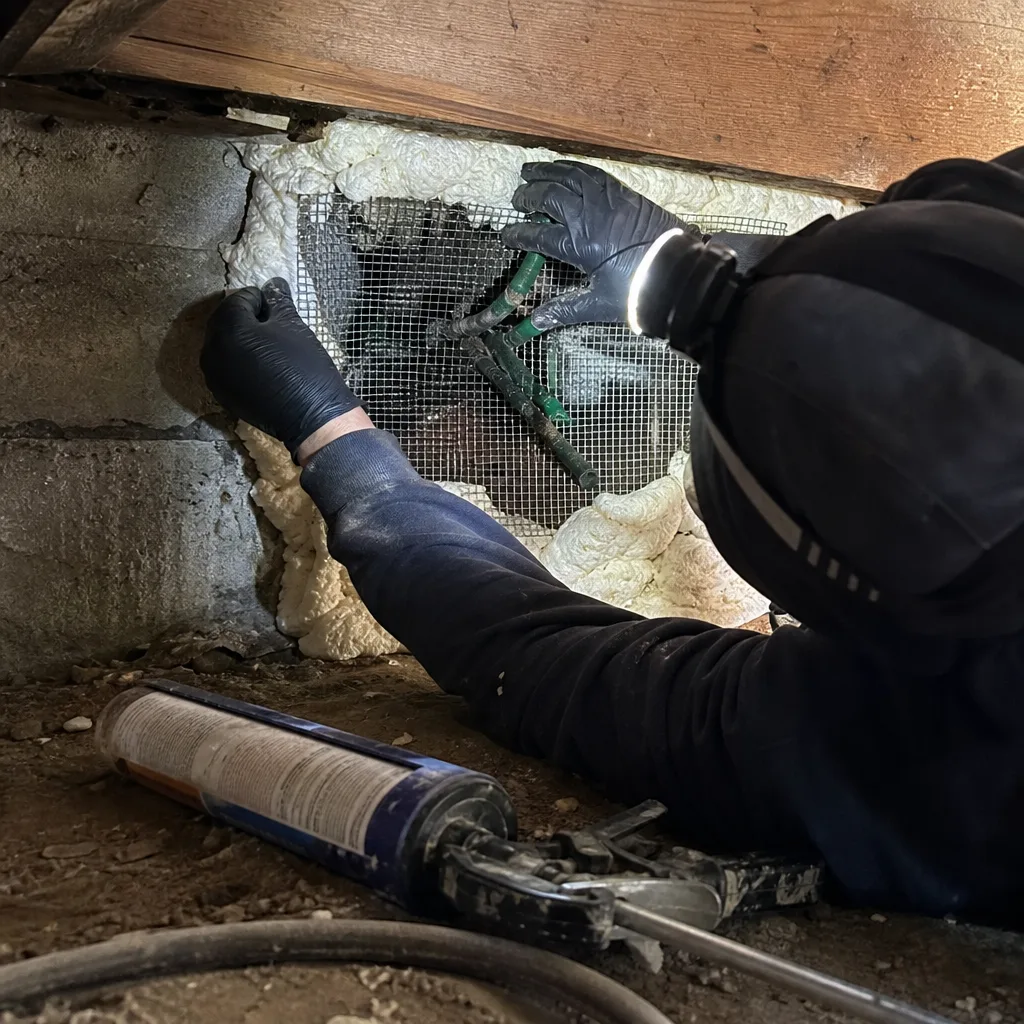
Most owners in Burbank never actually see the failed radiant barrier. What they notice is that the house stopped staying cool, the attic feels like an oven at 9 a.m., or the AC runs so long the thermostat never reaches the set point before 10 p.m. The fix is straightforward, but the diagnosis matters. Neil Ashford has walked enough Burbank attics to know that what looks like an AC problem is often a radiant barrier that has torn, sagged, or delaminated from the roof decking after a decade of San Fernando Valley heat cycles.
Which Icynene Models This Applies To
Icynene’s radiant barrier products were installed in Burbank homes from roughly 2005 through the early 2020s, most commonly as a foil-faced sheathing or a spray-applied radiant coating. The two configurations you’re most likely to have are the Icynene ProSeal radiant barrier underlayment (stapled to rafters, foil facing down) or a foil-laminated Icynene closed-cell foam panel. The compatibility gotcha is what’s above it: homes near the Verdugo Mountains get more direct afternoon sun than homes in the flats, and any radiant barrier installed against roof decking without a proper air gap loses up to 80 percent of its reflective performance.
If you’re ordering replacement material yourself, check the foil facing for a printed Icynene product code, usually starting with “IS” followed by four digits. That code tells us the exact series, thickness, and perforation rating. We match that spec, or upgrade you to a current Icynene formulation with the same R-value contribution and better tear resistance. Aftermarket equivalents exist, and we’ll tell you honestly when they’re a good fit and when they aren’t. For older Burbank homes with original 1960s framing, stock sizes rarely line up, and we cut to fit on site. We also stock Reflectix radiant barrier for smaller retrofit projects and garage door panels where the Icynene spec is overkill.
Signs Your Icynene Radiant Barrier Installation Is Failing
- Rooms directly under the roofline won’t hold temperature. The reflective surface has likely oxidized or been covered in dust and debris, which cuts its ability to redirect radiant heat by up to 70 percent. We see this most often in Burbank’s older ranch homes where the original radiant barrier was stapled, not glued, and has sloughed off the rafters over 15-plus summers.
- Your attic feels noticeably hotter than the garage. A functioning radiant barrier drops attic temperatures 20 to 30 degrees on a 95-degree Burbank afternoon. If your attic feels like a sauna the moment you pop the hatch, the barrier is no longer doing its job.
- The foil facing is torn, sagging, or falling in sheets. This is the obvious one, but it’s also the one people ignore because they rarely go up there. Torn sections create thermal bypasses, and the remaining material becomes decorative rather than functional.
- Energy bills rose with no change in your habits or household size. When a radiant barrier fails, the AC works harder because the ceiling below the attic is now absorbing more radiated heat. In Burbank, where summer highs regularly crack 95, that added load shows up as noticeable bill creep by July.
- Pest activity in the attic. Rodents and squirrels tear foil radiant barrier for nesting material, and the Burbank foothills have no shortage of either. If you’re already dealing with droppings or chewed wiring, the radiant barrier is almost certainly collateral damage.
Replacement Cost & What’s Included
For a typical Burbank single-story home with 1,200 to 1,800 square feet of attic, Icynene-compatible radiant barrier replacement runs $1,800 to $2,900 installed. Two-story homes and properties with steep pitch or finished attic space run $2,500 to $3,400 because of the extra material cuts, scaffolding, and labor. The range comes down to three factors: attic square footage, how much of the old material needs removal and disposal, and whether we’re also improving ventilation or air sealing while we’re up there.
Every install includes removal and disposal of the failed material, surface prep so the new barrier bonds or fastens correctly, the Icynene-spec radiant barrier itself, and a walkthrough with photos so you see exactly what went in. The work is backed by our 90-Day Done Right Promise: if something isn’t right, we fix it at no cost. We provide the full price before we start and we don’t change it halfway through. Most Burbank replacements are done in one visit, start to finish.
DIY or Call Us?
Installing radiant barrier in a Burbank attic is not a weekend project for a homeowner, and we’ll tell you honestly why. The work happens on your knees or back in a space that regularly hits 120 degrees in our summers. You’re working over joists with insulation and wiring, and one misplaced foot puts you through the ceiling. Torn foil is sharp enough to require stitches. More importantly, a radiant barrier only works when it’s installed with the correct air gap and the right foil orientation toward the attic space. Get either wrong and you’ve spent a weekend installing something that performs at a fraction of spec.
What you can safely do: check your attic hatch seal, look for obvious tears or sagging from the access point, and note which rooms feel hot first in the afternoon. That diagnostic information helps us price the job faster. For the work itself, call (747) 837-5834 and a live person will answer, whatever time you call.
FAQs
Properly installed Icynene radiant barrier lasts 20 to 30 years in our climate, but Burbank’s heat and dust are hard on product. In attics above 140 degrees, the foil facings can begin delaminating at the 15-year mark, and the reflective surface loses effectiveness as dust settles. We recommend an inspection during any attic service so you’re not losing performance quietly.
Small tears and pulled staples can be repaired, but once more than 30 percent of the surface area is sagging, torn, or delaminated, replacement is the better financial call. Repairs on large sections cost nearly as much as new material while still leaving you with old, degraded foil elsewhere.
Most Burbank radiant barrier replacements are completed in 4 to 7 hours, which means a single visit from our team. Larger two-story homes or attics with extensive rodent damage or decking replacement can push into a second day.
Yes. Our Burbank crews carry Icynene-compatible radiant barrier material and the fasteners and sealants that go with it. If you’re not sure what you have, call (747) 837-5834 and we’ll help you identify it before we even schedule the visit. Estimates are free.
If your Burbank home’s Icynene radiant barrier has failed, don’t wait for another 100-degree week to test your AC’s limits. Call (747) 837-5834 for a free estimate. A live person answers 24/7, and we’ll schedule at a time that works for you. Good insulation shouldn’t be something you think about – that means it’s working.
Written by Neil Ashford, Owner, Warmline Insulation Co. at Warmline Insulation Co., serving Burbank and nearby areas.